Redesigning match-making

Cutting operational waste

UX CHallenge:

Our challenge was to build a better match-making system to reduce the hours spent manually matching learners and coaches. Our system handled more than 40,000 matches between learners and coaches each year. Matches were formed on many categories including target language (instruction), support language (native language of the learner), time-zone, coach pay-rate, coach availability, and time-slot availability. Despite this, we were losing large amounts of margin in manual scheduling processes when this match-making system did not work.

Our Status Quo caused operational leaks

Our company matched learners with language trainers using an internal assignment system. While it optimized for margin, prioritizing lower-cost trainers globally, it created downstream issues:

We sought to reduce operational load while increasing client satisfaction

Our task was to overhaul the matchmaking system by either remaking our existing flow or greenfielding a new one in order to achieve improved operational efficiency.

Primary Goals:

  • Reduce onboarding time (the average time from first login to first session was more than 1 month, we wanted it at just over 1 week).
  • Reduce number of substitutions, support escalations, and account ops escalations.
  • Increase revenue recognition by decreasing number of lost sessions per client.

Secondary/Emergent Goals:

  • Improve customer experience by giving them more control over their product.
  • Create more opportunities for trainer substitution by lowering the cost of changing trainers, course time, or other course details.

Inflections, actions, and dead-ends

Fix the old or make something new?

  • One camp argued in favor of fixing the existing system as it would be the cheaper option.
  • The other camp argued in favor of building a new system as it would better achieve the business goals.
  • Ultimately, we decided to build a new system as it was a feature that clients expect from platform like ours. We didn't want our products to fall behind.

Marketplace model:

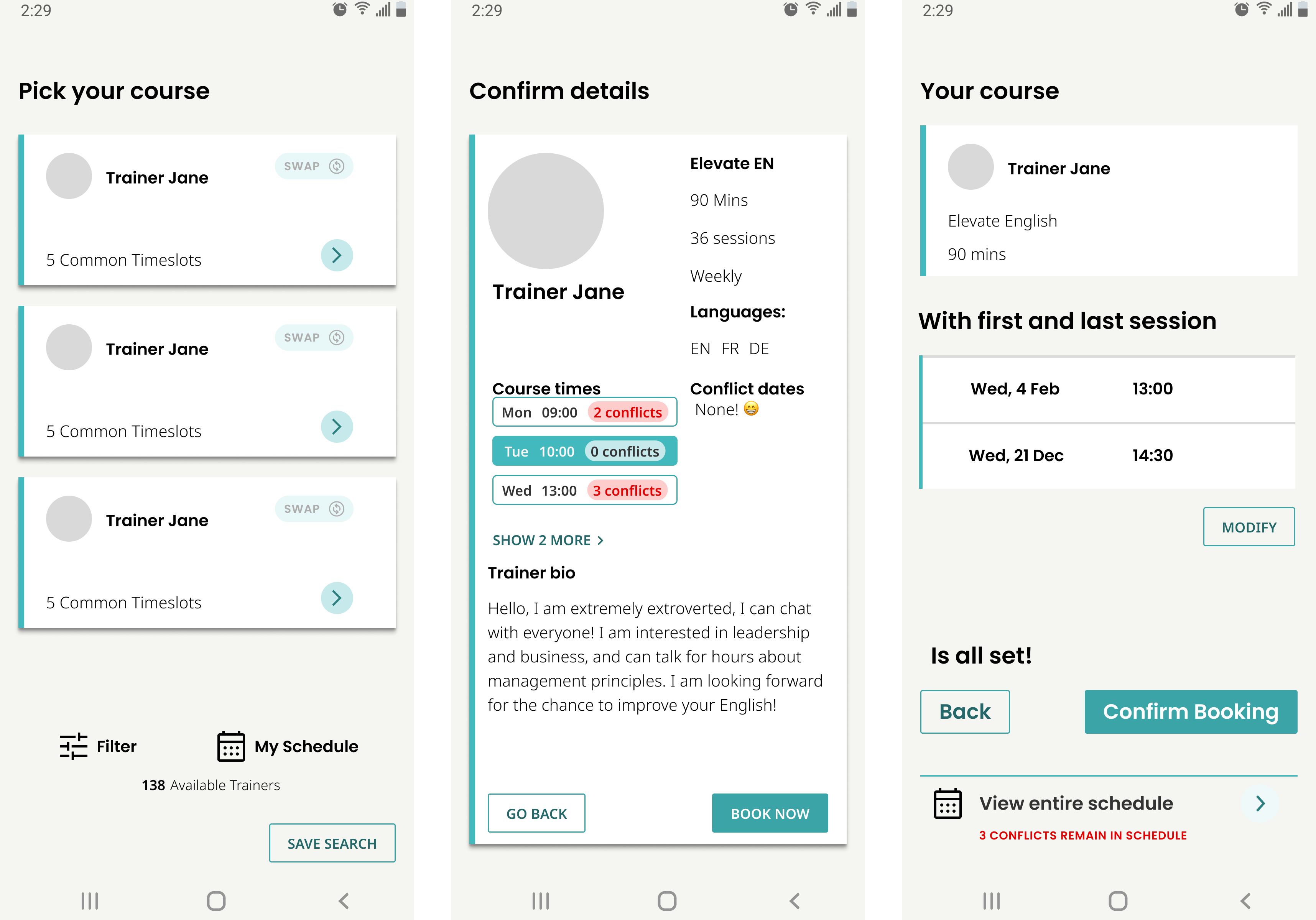
  • We considered a lot of options, Tinder, The Auction House, Trainer-jail, Black-Box AI Sorting Hat, but settled on the Supermarket as the best appraoch.
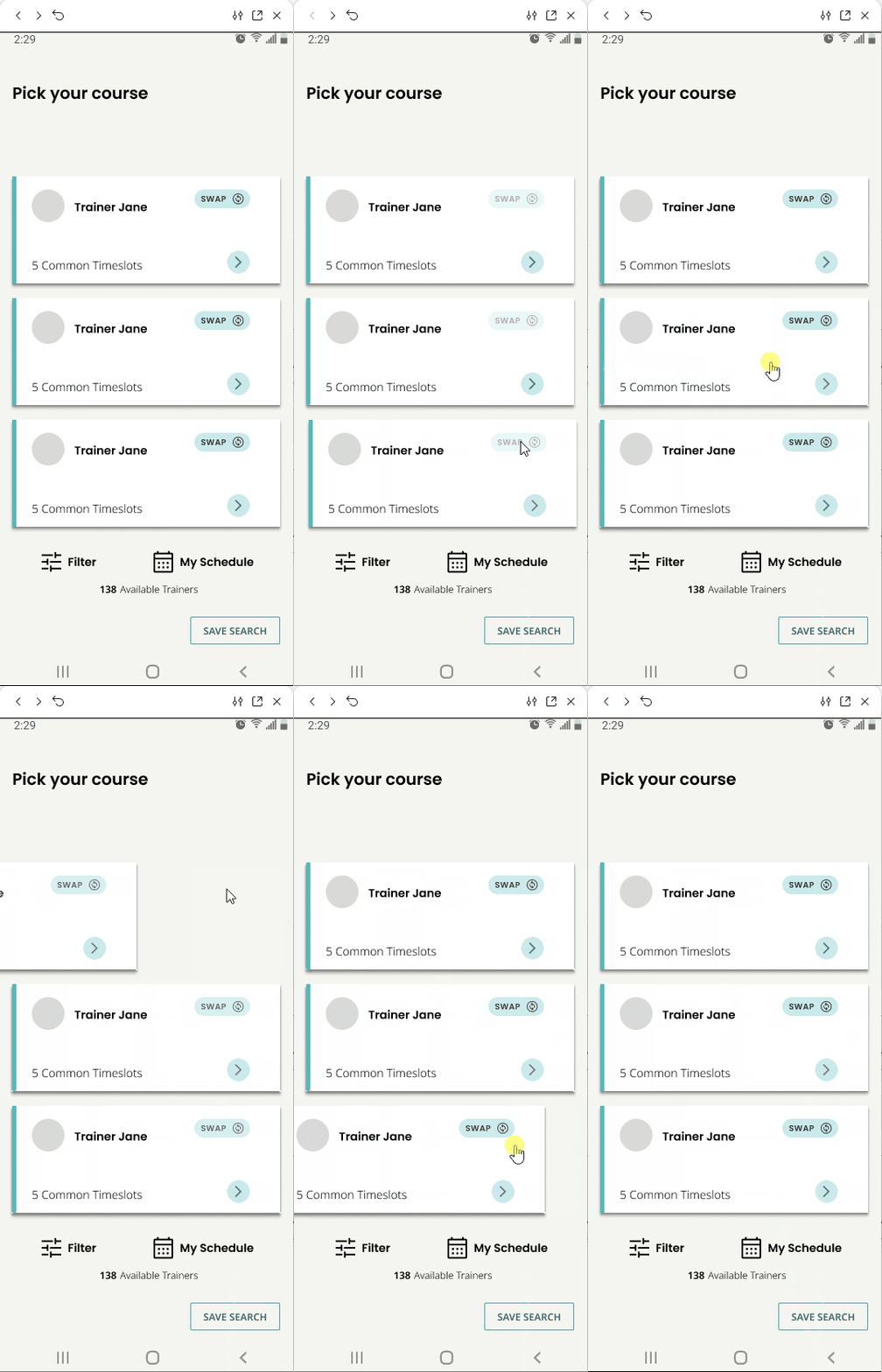
  • Learners "shop" for courses and pick what is best for them.
  • Rather than having all the products seen at once, we made the "Podium Model" which psychologically guides users to make a choice. We limit the choice of the learner down to 3 possible trainers, hence "Podium." Our goal is for the learner to select any trainer, and by adding in a permanancy to removing trainers incentives the learner to make a choice.

Accessibility Wins

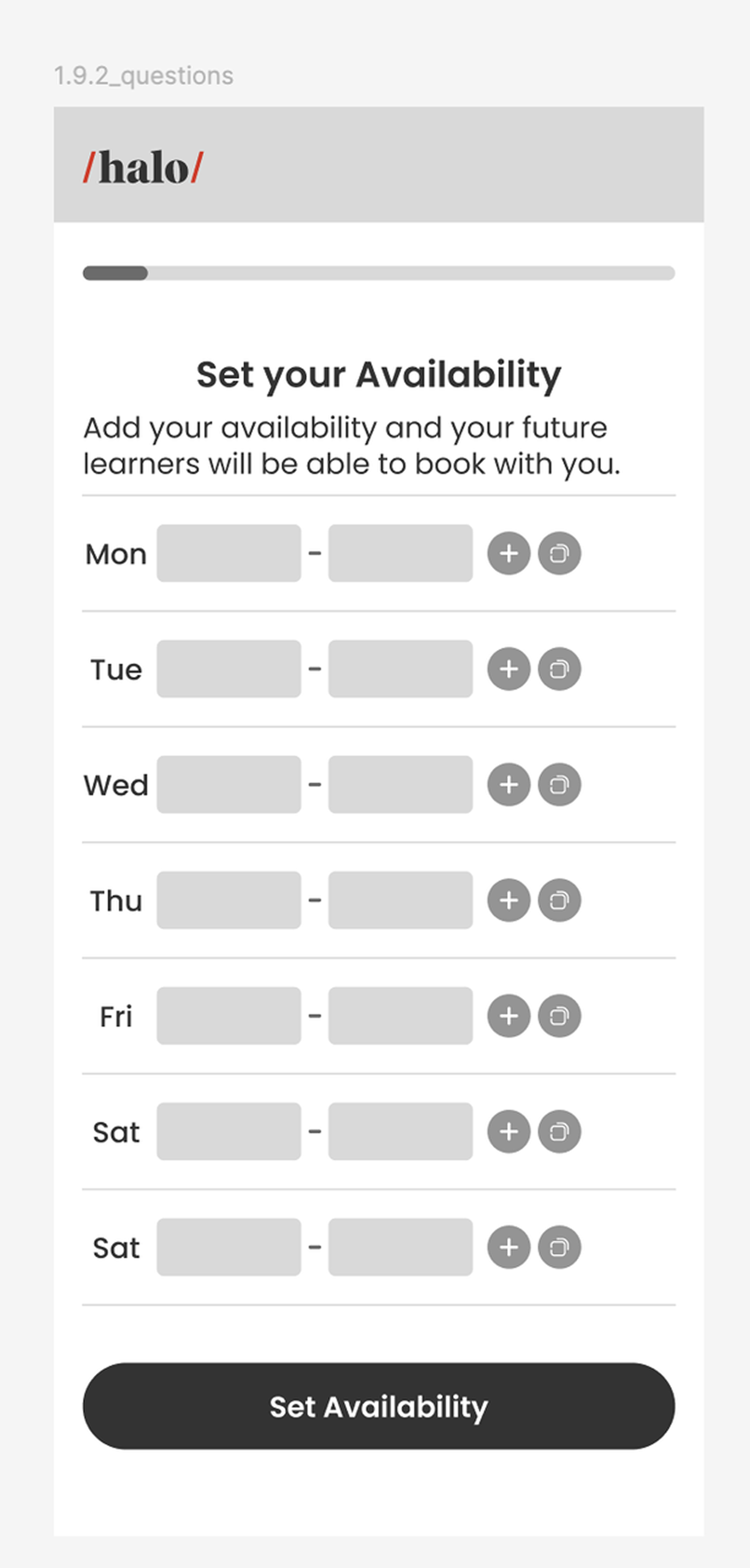
  • We were able to address accessibility and mobile usability of our platform's availability picker.
  • The status quo used a matrix style graphical interface that was inaccessible to screen readers and nearly impossible to use on mobile due to ineffective horizontal and vertical scroll.
  • We benchmarked apps like Calendly and made a simple but effective availability picker that improved all our products.

We were able to alleviate operational pressure company wide

Our task was to overhaul the matchmaking system by either remaking our existing flow or greenfielding a new one in order to achieve improved operational efficiency.

Results:

  • Reduced manual trainer assignment allowing reassignment of estimated 350.000€ annual allocation.
  • Reduced the number of Support escalations.
  • Increased perceived autonomy and client-reported product value.

Explore the prototype:

Next: Leading design sprints

Want to know more? reach out through: